
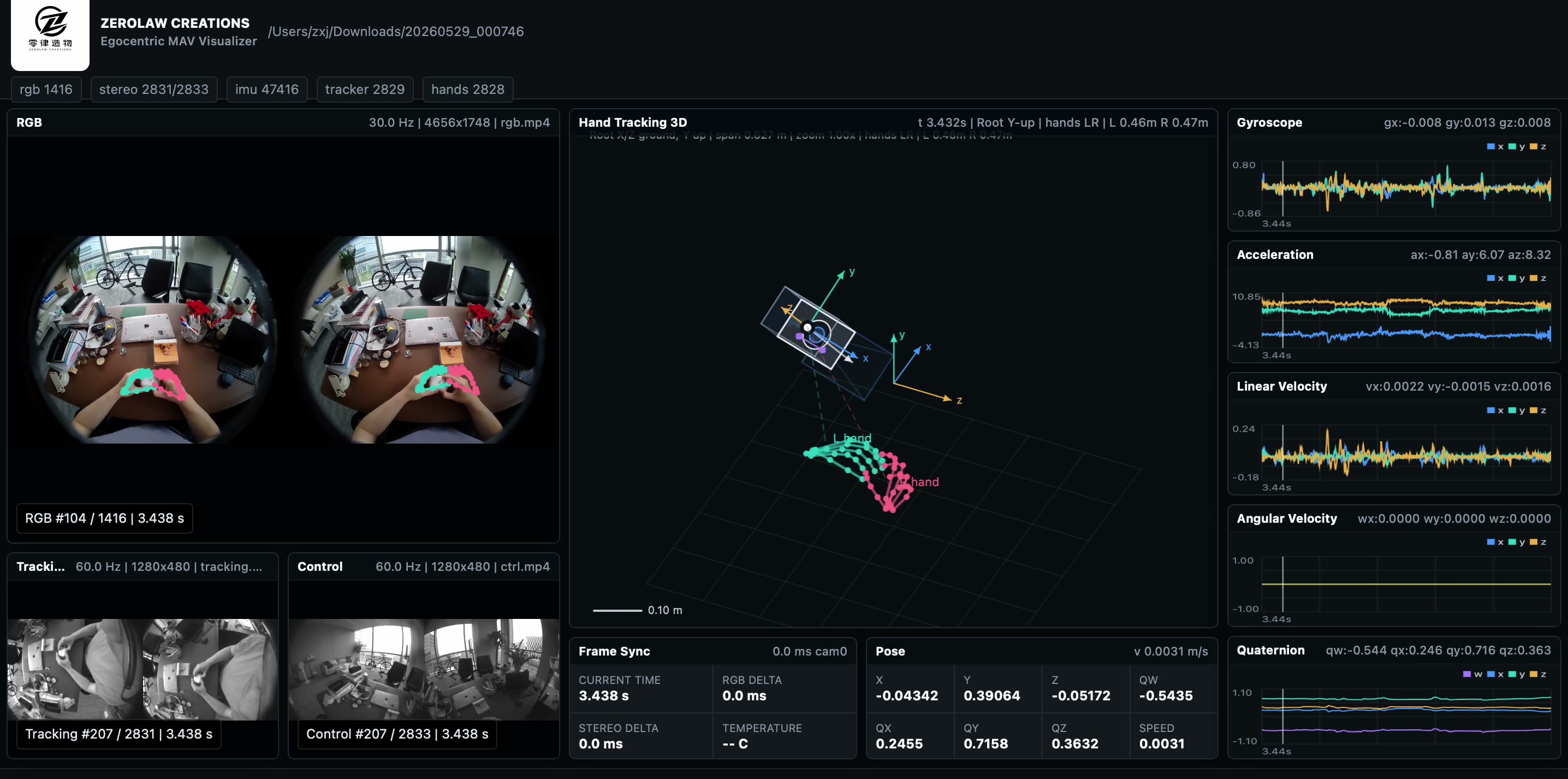
Physical AI learns from interaction. That makes its data requirements different from those of models trained primarily on text, images, or internet video. A camera stream can show what happened, but it rarely explains the geometry, timing, intent, or action behind the event.
Ego data addresses this gap by keeping first-person observation, motion, and action connected inside the same episode.
The episode is the unit of value
A trainable episode keeps observations and actions on one timeline. RGB, depth, inertial measurements, head pose, hand pose, object state, and task labels must remain aligned closely enough for a model to recover cause and effect.
This requires a data contract: a clear definition of coordinate systems, timestamps, calibration, sensor confidence, task boundaries, and output schemas. Without that contract, each collection becomes a new integration project.
Quality is structural
More hours do not automatically create a better corpus. Coverage, consistency, recoverability, and task relevance determine whether the data can support a training objective.
- Coverage describes the environments, people, objects, and task variations represented.
- Consistency keeps equivalent signals comparable across devices and collection sessions.
- Recoverability preserves enough calibration and provenance to diagnose failures later.
- Task relevance connects every signal to a concrete modeling or evaluation need.
Build backward from training
The most reliable collection programs begin with the target model and work backward. The learning objective determines the episode schema; the schema determines the processing pipeline; and the pipeline determines what the hardware must observe.
This is how real-world experience becomes reusable infrastructure rather than a collection of isolated recordings.