Protocol
Task taxonomy, episode schema, variation plan, consent, and quality thresholds.
 Zerolaw
Robotics data collection
A practical guide to turning model requirements into synchronized collection protocols, field-ready hardware, quality controls, and model-ready episodes for robotics and Physical AI.
Definition
Robotics data collection is the structured capture of observations, motion, actions, task context, and outcomes used to train or evaluate systems that act in the physical world.
The useful unit is not a video file or sensor dump. It is an episode with aligned timestamps, coordinate systems, calibration, task boundaries, provenance, and quality signals. Zerolaw designs the complete path from collection intent to a reusable training asset.
A complete collection program
Every layer is defined around the target model, the task distribution, and the evidence required to trust the data.
Task taxonomy, episode schema, variation plan, consent, and quality thresholds.
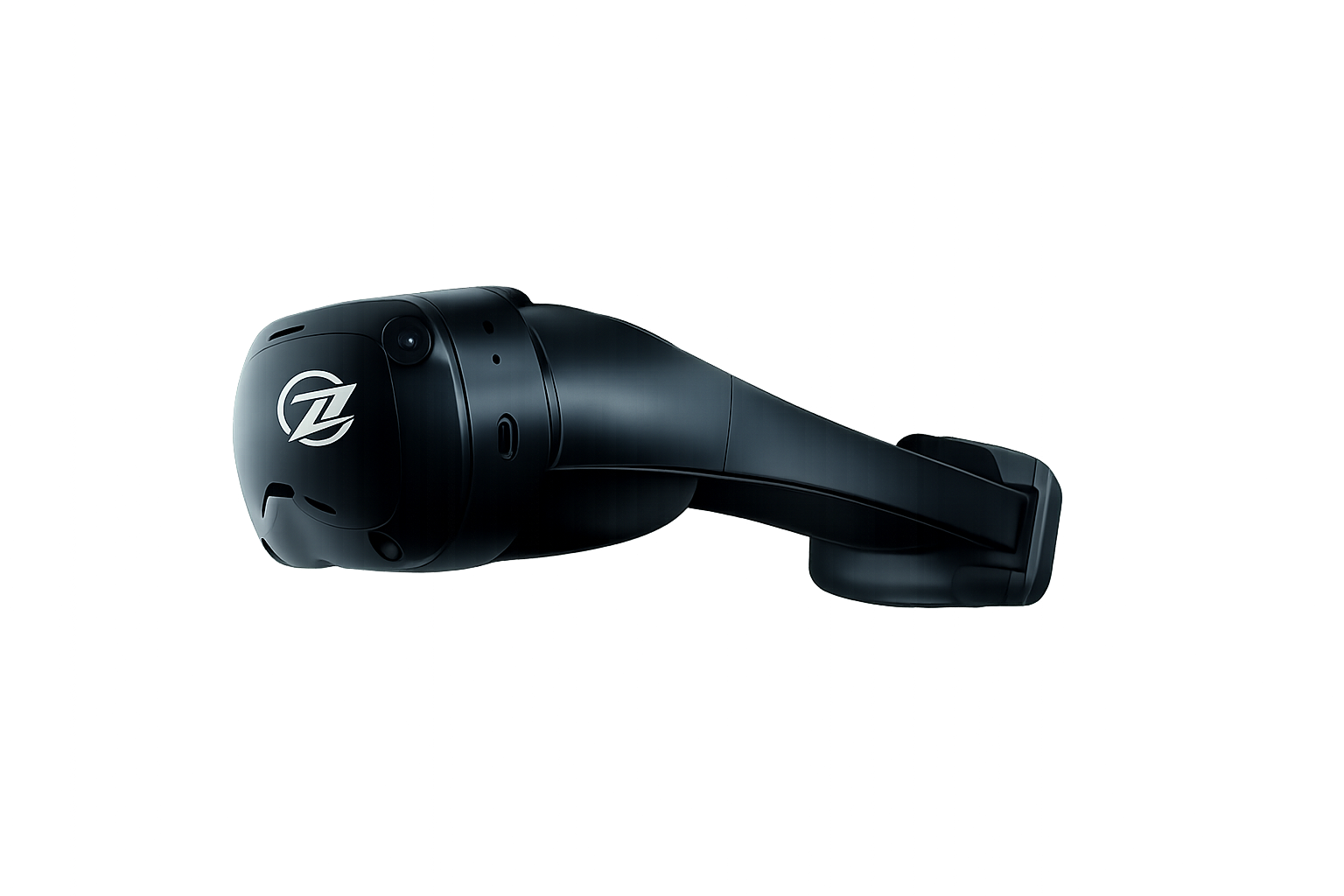
Wearable hardware or custom multimodal sensing selected for the required observability.
Collector guidance, device health, coverage tracking, and recoverable field workflows.
ZL Core, ZL Annotation, and ZL Corpus turn recordings into validated, versioned episode outputs.
Delivery workflow
Map target behaviors, environments, failure modes, and evaluation criteria to explicit data requirements.
Set sensors, coordinate frames, timestamp tolerances, task boundaries, metadata, and output schemas.
Track device health, task coverage, signal quality, and operating exceptions while data is still recoverable.
ZL Core synchronizes and calibrates, ZL Annotation reviews semantics, and ZL Corpus packages episodes for training.
Signals and outputs
Signal selection begins with the learning question, not the longest possible specification sheet.
| Data layer | Typical signals | Training value |
|---|---|---|
| Observation | RGB, stereo, depth, scene geometry | State estimation and world modeling |
| Motion | IMU, head pose, hand pose, object tracks | Temporal alignment and action context |
| Task | Goals, phases, outcomes, retries, failures | Supervision, reward design, and evaluation |
| Provenance | Device, calibration, environment, operator, version | Debugging, filtering, and reproducibility |
| Quality | Confidence, drift, dropped frames, review status | Sampling, weighting, and acceptance gates |
Collection applications
Build diverse, reusable real-world observations and actions for Physical AI foundation models.
Capture human demonstrations with the task context required for behavior cloning and policy learning.
Create controlled task suites, edge cases, and failure distributions for repeatable model assessment.
Robotics data collection FAQ
It is the structured capture of observations, motion, actions, task context, and outcomes used to train or evaluate robotic and Physical AI systems.
A program can include synchronized RGB or stereo video, depth, IMU, head and hand pose, object tracks, maps, task boundaries, operator inputs, and semantic labels.
We start with the target model, tasks, failure modes, and evaluation criteria, then define the episode schema, sensors, calibration, quality gates, field workflow, and delivery format.
Yes. Our multimodal solution service can combine first-person vision with IMU, depth, pose, EEG, sEMG, and other task-specific signals.
Build with Zerolaw